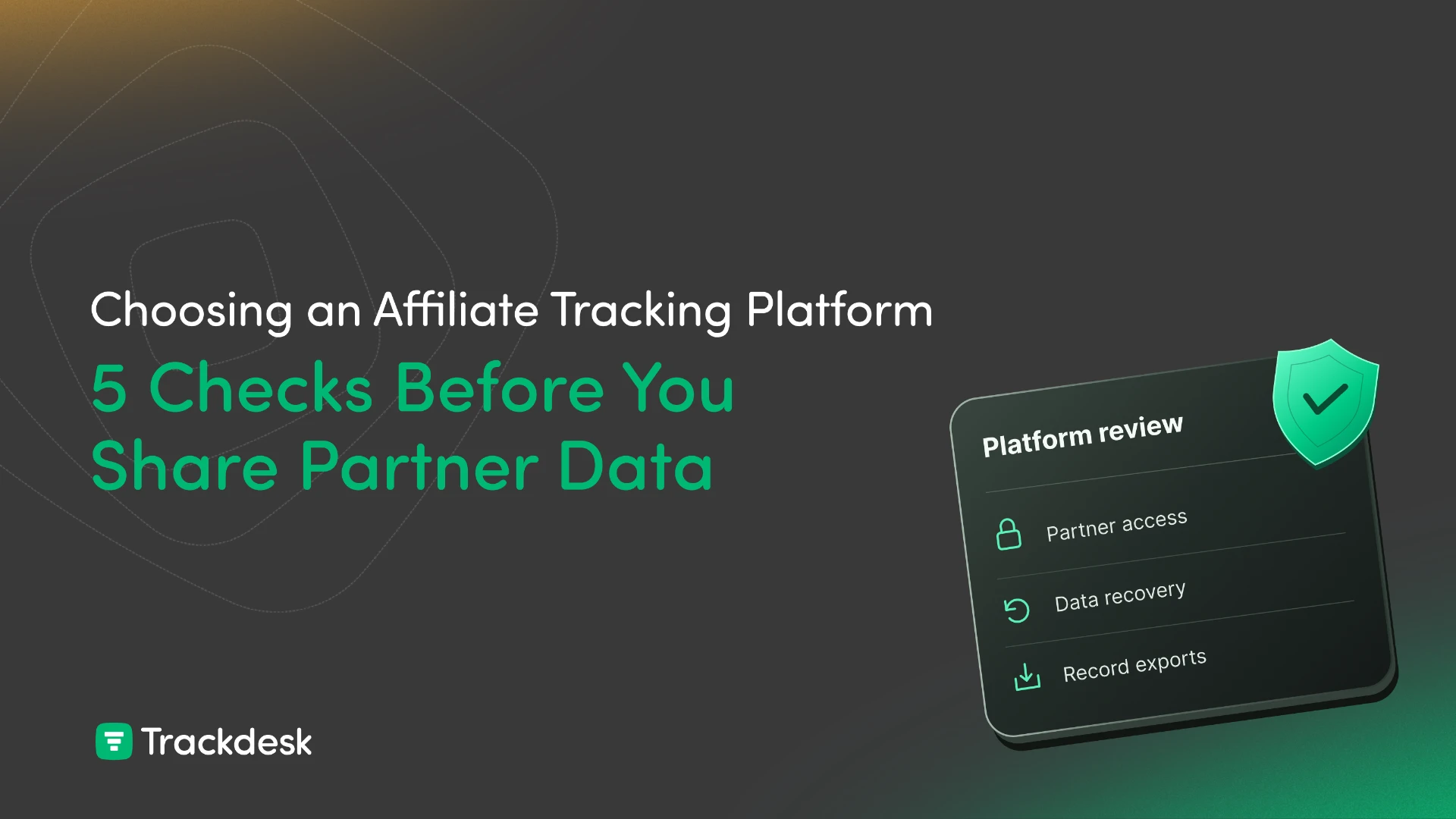
How to Vet an Affiliate Tracking Platform Before You Trust It With Partner Data
Five checks for affiliate managers comparing white-label software, low-cost vendors and custom trackers. Use them to verify who can access partner data, what survives an outage and how you would leave.

Imagine that your largest publisher opens its monthly report and finds another partner’s commissions in the export. It forwards the file to your affiliate manager with one question. “Who else can download ours?”
In this hypothetical incident, the portal carries your logo. The publisher expects an answer from you, even if another company operates the software. That is the trade-off behind white-label affiliate tracking. You control the relationship with the partner and depend on the provider for evidence when something goes wrong.
An established platform earns a premium when its team can demonstrate access controls, explain a tracking interruption and return the records you need to settle balances. A public team, named support contacts and documented operating history make those claims easier to investigate. Use the following checks before importing partner records or directing paid traffic to a new tracking domain.
1. Find the people responsible for a lost conversion
Ask who takes ownership if clicks are arriving but sales stop appearing on a Saturday. A salesperson may know your launch date. You also need a support route your weekend operator can use, the hours it covers, and the person on your side authorized to escalate. Get the applicable support commitments in writing.
Look for evidence outside the sales conversation. Trackdesk publishes a team page and a public platform status page. A buyer can identify the company behind the product and inspect what it reports about service availability. Read the component names and reporting period carefully. Your own checkout integration can fail while the provider reports normal service. Meet the Trackdesk team · Trackdesk platform status
A small vendor may give you direct access to its founder. Ask who handles the same incident when the founder is unavailable. For a tracker your team vibe-coded internally, put that question to the engineer who built it. A second person should be able to take the call and find the affected records.
2. Check what a partner can see, export and change
Request two test affiliate accounts and populate each with clearly labeled sample transactions. Sign in as each partner through the ordinary portal, run the reports available to that account and download its statement. Review the exported columns as carefully as the screen. A summary that displays only a commission total may produce a file containing customer identifiers your partner has no reason to receive.
Repeat the exercise with a junior affiliate manager’s role. Can that person download the entire partner list or change payout details? Ask how access is removed when a colleague leaves, who can review administrative changes and what evidence the vendor would retain after a suspected disclosure. Use synthetic records throughout the evaluation.
Give the vendor a payout dispute to handle. A publisher questions last month’s balance and is still sending customers today. In Trackdesk, an affiliate manager can set that publisher’s billing status to Excluded while finance reviews the amount. The balance appears separately, new referrals still earn commission, and the publisher can sign in to check them. Ask the person running the demo to open the activity log afterward. In Trackdesk, that entry shows the previous and new billing status, so finance can verify exactly what changed. How affiliate billing status works
3. Walk through an outage during your busiest campaign
Take a hypothetical retailer running a 48-hour promotion. Its checkout keeps accepting orders while the affiliate integration stops recording sales for 40 minutes. Once the dashboard comes back, the retailer still owes publishers commission on eligible orders placed during the gap. An uptime percentage cannot tell finance which orders those were.
Ask the provider to walk through recovery with a sample order. Where was the referral identifier stored? Which order record survived? Who can submit missing conversions, and how does the team avoid crediting a sale twice when delayed events finally arrive? Record any step that depends on your checkout retaining a particular identifier. If neither side kept the referral evidence, some orders may have to be settled under an agreed estimate or dispute policy.
Choose the failure that fits your business. A lead generation network needs to reconcile CRM approvals received after an interruption. An iGaming operator may need to distinguish missing first deposits from delayed reporting. For either business, a useful recovery demonstration ends with a list of affected records and an explanation partners can check.
4. Ask for an export you could use to leave
Before signing, request an export from a test program with two partners, a reversed conversion and one completed payout. Give it to finance and ask them to calculate the outstanding balance for each partner. If the file contains only lifetime totals, they cannot tell whether an adjustment happened before or after settlement.
| Record to request | The question it should answer |
|---|---|
| Partner and offer identifiers | Which partner and commercial agreement does this transaction belong to? |
| Conversion references and adjustments | Which order or lead earned commission, and what changed later? |
| Payout records and settlement dates | Which earnings have already been paid? |
| Tracking domain and link configuration | Which live placements need attention if the provider changes? |
Clarify how long exports remain available after termination and who controls the domain used in existing affiliate links. Keeping the domain can help with continuity, but preserving a URL also requires the replacement system to understand its paths and parameters. For networks already facing that decision, Trackdesk’s migration discussion covers data ownership and the operational signs that a platform has become difficult to replace. Seven signs your affiliate network has outgrown its software
5. Compare the price against the work your team inherits
Ask each finalist for the same three items before you compare quotes: a sample partner export, a written answer to the campaign outage scenario and the support terms included in the proposed plan. Give the export to finance, the outage answer to engineering and the support terms to the person who handles publisher complaints. Each reviewer should be able to say what they can verify and what work lands with them.
A low-cost platform can be a sensible purchase for a small program when access is appropriately limited, records reconcile and someone can handle an interruption. A managed white-label platform is worth more when it can demonstrate those capabilities at your operating volume and give your team identifiable people to call. If a provider can show you the branded portal but cannot produce a usable partner statement, you have found the missing requirement before your partners find it for you.

Hi! I'm Bohdan, Content Manager at Trackdesk. I write about affiliate marketing, tracking, and partner programs — breaking down complex topics into something you can actually use — and I'm the voice behind Trackdesk's social media, from platform updates to industry news. Wherever you find us, the goal is the same: answers that are easy to find and easy to apply.